Tag

User Experience

01

Can a Team of AI Agents Actually Ship a Web App? Building a Multi-Agent Frontend Pipeline

Most AI coding tools are good at one thing at a time: generating a snippet, sketching a layout, reviewing a pull request. This article walks through a multi-agent system built on CrewAI that assigns those jobs to five specialized AI agents working in sequence, from requirements analysis to a fully styled Next.js page, and evaluates whether the result actually holds up against human-built benchmarks on code quality and visual design.


02

Teaching a Charging Port to Talk: Designing Onboarding for EV Newcomers

Charging an electric car isn't like filling up with gas, and most drivers' mental models haven't caught up yet. This article walks through Project XCeed, a voice assistant built into the charging port that adapts its guidance to a driver's actual experience level, and the user study, run with ten participants and the Short UEQ, that tested whether talking to a charging cable is actually a good idea.

03

One App, Every Screen: How YouTube's Frontend Succeeds on Various Devices

Behind every YouTube video sits a genuinely staggering amount of engineering, most of which has nothing to do with the video itself. This article looks at how a platform like YouTube handles wildly different devices and codecs, why its interface quietly manipulates your attention more than you might realize, and what it actually takes on the backend to serve a unified API to millions of different clients at once.

04

Less JavaScript, Faster Pages? Putting Qwik.js's Resumability to the Test

Every modern JavaScript framework eventually runs into the same wall: the more interactive a site gets, the more JavaScript the browser has to download, parse, and execute before anything actually works. This article breaks down why that happens, walks through Qwik.js's alternative approach called resumability, and puts both ideas to the test with a real side by side performance comparison against Next.js.

05

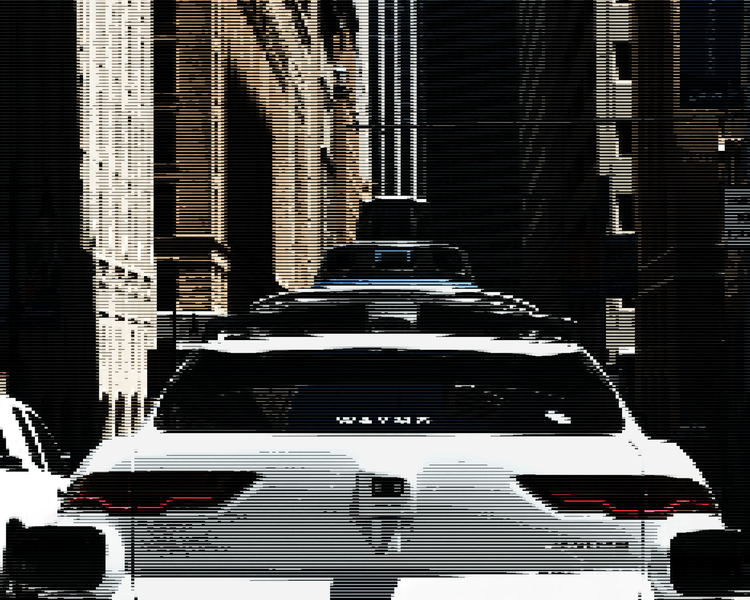
The Trust Gap: A Design Fiction Test of Self-Driving Taxis in Rural Germany

Autonomous driving research usually centers on the technology. This post summarizes a study into Experience Design for autonomous driving that instead centers a specific, often-overlooked target group: students living in rural areas with limited public transport. Using exploratory interviews and the Design Fiction method, the team developed and tested Navia, a fictional autonomous ride-on-demand service.

06

Can a Chatbot Fight Loneliness? Designing an AI Companion for Seniors

Could a LLM-based product meaningfully reduce loneliness among older adults? That deceptively simple question drove a student project through the full Design Thinking process, from empathy mapping through personas, competitor research, and real user interviews, resulting in AchtSAM, a voice-first AI companion. Along the way, the team hit a genuinely hard ethical fork: whether an AI should be allowed to impersonate a deceased spouse, and why they ultimately said no.

07

Hybrid Rendering, Headless CMS, and PWAs: Combining Three Web Trends in One App

Hybrid rendering, headless CMS architectures, and Progressive Web Apps are usually treated as separate trends in modern web development. This post summarizes a bachelor thesis that asks whether they can instead be meaningfully combined, and tests that question by building MovieRec, a movie discovery platform using Next.js and Strapi.